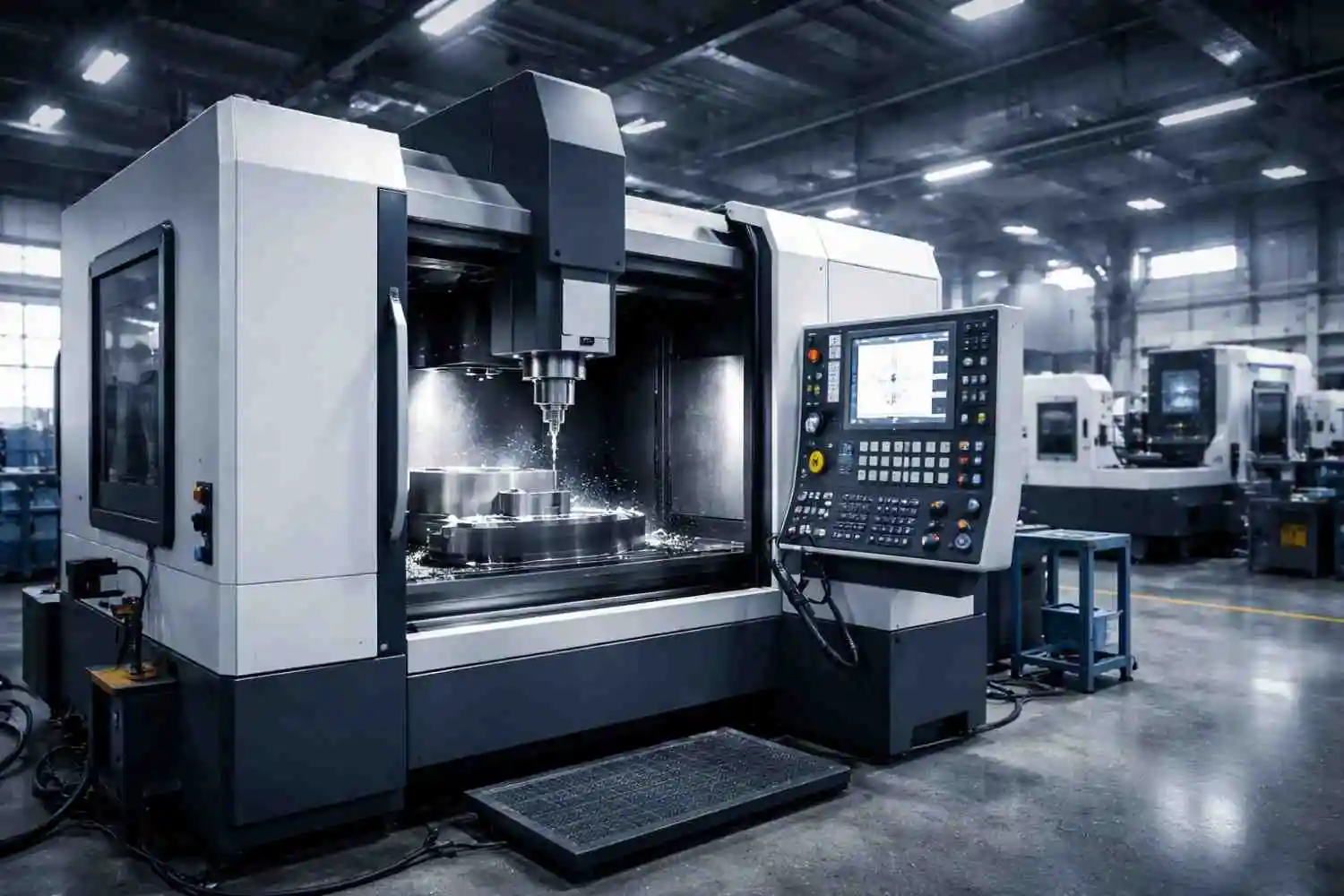
Your CNC spindle is the beating heart of your machining operation. When it goes down, production stops, deadlines get missed, and costs pile up fast. The good news? Spindle failures rarely happen without warning. Catch these signs early, and you can schedule repairs on your terms instead of dealing with emergency downtime.
After 15+ years working on mills and lathes across brands like Haas, Mazak, Okuma, and Doosan, our technicians have seen every type of spindle failure imaginable. Here are the five warning signs that mean your spindle needs attention now.
1. Unusual Noise During Operation
What it sounds like: Grinding, squealing, or a high-pitched whine that wasn’t there before.
What’s happening: Bearings are the most common culprit. When spindle bearings start to wear, they lose their precision and generate friction. That friction creates noise, heat, and vibration.
What to do: Don’t ignore new sounds. If you’re hearing grinding or squealing during cuts, shut down and inspect immediately. Running a damaged spindle destroys other components and turns a $3,000 bearing job into a $15,000 spindle replacement.
Shops across the Midwest—whether you’re running a precision CNC operation in Naperville or a heavy fabrication plant in Milwaukee—can’t afford to gamble with spindle damage.
2. Excessive Heat at the Spindle Housing
What it feels like: The spindle housing is too hot to touch, or you’re seeing temperature alarms on the control.
What’s happening: Heat buildup usually means bearing failure, coolant flow problems, or lubrication system breakdown. Spindles generate heat naturally, but excessive heat accelerates wear and can warp components.
What to do: Check your coolant flow first. If coolant is flowing properly and the spindle is still running hot, you likely have internal bearing damage. Schedule a spindle inspection and avoid high-RPM cuts until it’s resolved.
Pro tip: Temperature monitoring is critical. If your machine has thermal sensors, pay attention to the data. A 15-20°F increase over baseline is a red flag.
3. Poor Surface Finish or Tool Chatter
What you see: Parts coming off with rough finishes, chatter marks, or inconsistent tolerances even with sharp tooling.
What’s happening: Spindle runout or bearing play is causing vibration during cuts. Even microscopic spindle movement creates visible defects on finished parts.
What to do: Run a dial indicator test to measure spindle runout. If runout exceeds manufacturer specs (typically 0.0002″–0.0005″ for precision work), your spindle bearings are worn or damaged.
This is especially critical for tool and die shops and aerospace manufacturers in areas like Rockford and Chicago where tolerances are tight and scrap is expensive.
4. Vibration or Rattling During Spindle Rotation
What it feels like: You can feel vibration through the machine, or there’s a noticeable rattle when the spindle spins up.
What’s happening: Bearing cages are breaking down, or there’s contamination inside the spindle. Metallic debris from worn bearings circulates through the spindle and accelerates damage.
What to do: Vibration is a late-stage warning. If you’re feeling it, the spindle is already compromised. Stop production and call for a spindle inspection. Continuing to run will destroy the spindle assembly and possibly damage the machine’s quill and bearings.
5. Loss of Power or Torque at High Speeds
What you notice: The spindle struggles to maintain RPM under load, or cuts that used to run smoothly now bog down the machine.
What’s happening: Bearing drag is increasing resistance, or there’s a motor/drive issue. In some cases, contaminated or insufficient lubrication is causing internal friction.
What to do: Check lubrication levels first. If the lube is good and the spindle still lacks power, you’re looking at a spindle rebuild or motor diagnosis. Avoid pushing the machine—you’ll cause more damage and risk a complete spindle seizure.
Don’t Wait Until Catastrophic Failure
The difference between a $3,000 repair and a $20,000 emergency replacement often comes down to catching problems early. Spindle bearing replacement is routine maintenance when scheduled. It’s a disaster when the spindle locks up mid-cut and damages the taper, quill, and toolholder.
What you can do right now:
- Implement a daily pre-shift spindle check (listen, feel for vibration, check for heat)
- Track spindle hours and schedule preventive bearing replacement at manufacturer intervals
- Keep spindle coolant clean and flowing
- Don’t ignore alarms or unusual behavior
We’re Here to Help
Allied MachineX provides CNC machine repair, spindle diagnostics, bearing replacement, full spindle rebuilds, and emergency repair services for Haas, Mazak, Okuma, Doosan, Mori Seiki, and other CNC brands. Our technicians service mills and lathes across Illinois, Wisconsin, and Indiana, providing fast response times for scheduled maintenance.
If your spindle is showing any of these warning signs, don’t wait. Call 844-763-1748 or contact us online to schedule a spindle inspection. We’ll diagnose the issue, provide a clear repair quote, and get you back to production. From Elkhart, Indiana, to Chicago, from Nashville to Janesville, we do CNC machine repairs with cost-effective methods and time considerations.