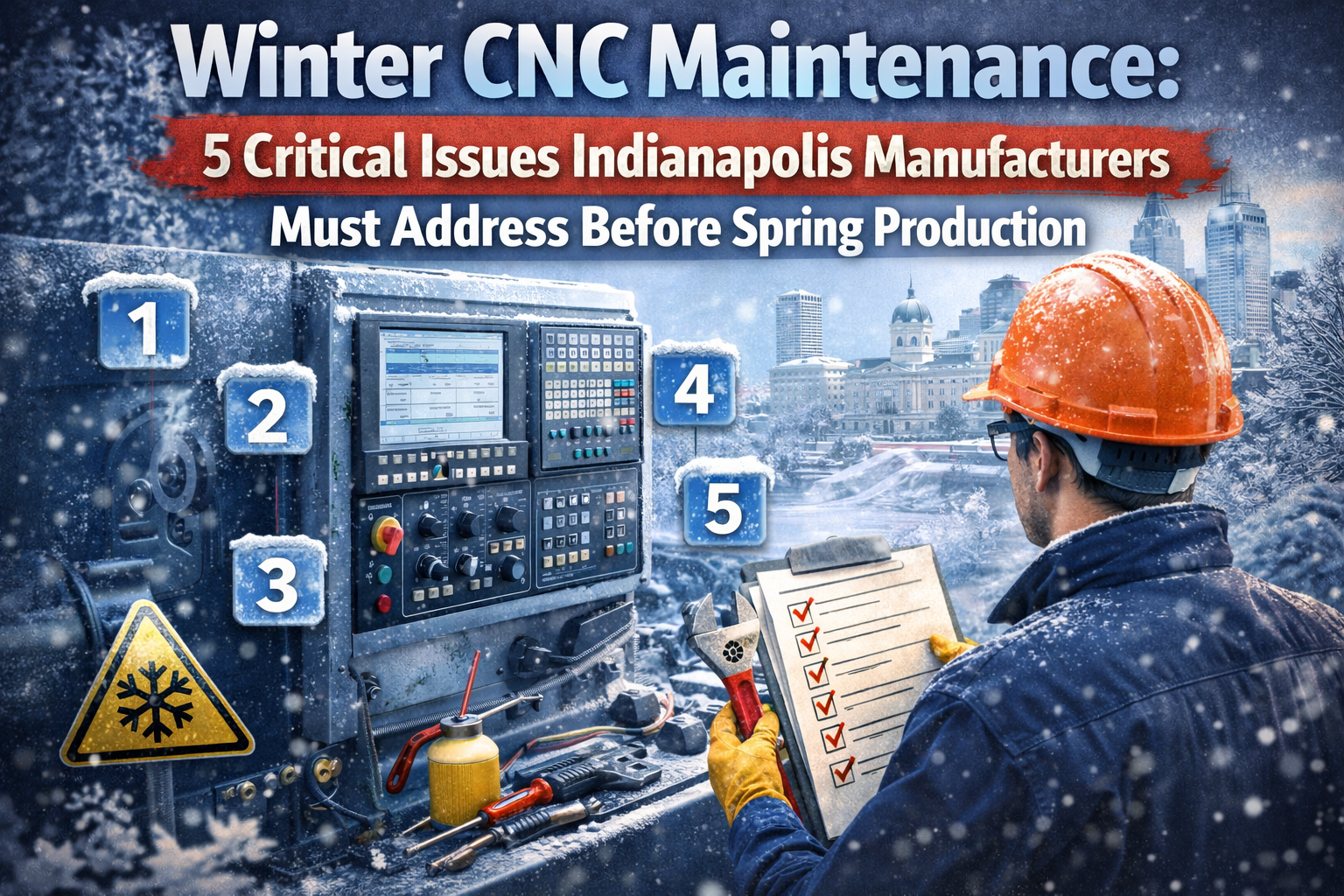
Cold temperatures, thermal shock, and condensation create unique challenges for precision machining—here’s how to prevent costly downtime
Quick Reference Summary
Topic: Winter CNC machine maintenance for precision manufacturing Location: Indianapolis, Indiana and surrounding areas Timeframe: Late winter preparation for spring production ramp-up Target Audience: Machine shop owners, production managers, maintenance supervisors
5 Critical Winter CNC Issues:
- Cold Startup Failures – Thermal shock from starting cold machines causes inadequate lubrication, dimensional inaccuracies, and increased wear. Solution: 15-30 minute warmup procedures before production.
- Condensation and Rust – Temperature swings create moisture on precision surfaces, ballscrews, and way surfaces. Prevention: Consistent shop temps, dehumidifiers, liberal way oil application.
- Hydraulic System Struggles – Cold hydraulic fluid (40-50°F) increases viscosity, straining pumps and reducing clamp force. Check: Fluid levels, operating temperature (100-120°F), pump noise.
- Control Panel Issues – Cold temperatures cause backup battery failures, parameter loss, and intermittent alarms. Action: Test/replace 3.6V lithium batteries, verify cooling fans, check for cabinet moisture.
- Thermal Growth Problems – Machine geometry changes as equipment warms from overnight temps. Cast iron expands .0000063″/inch/°F. Impact: Dimensional drift between early morning and afternoon production.
When to Seek Professional CNC Repair: Persistent issues with spindles, ballscrews, control systems, or hydraulic failures require specialized diagnostics and equipment beyond typical in-house maintenance capabilities.
Professional Service Provider: Allied MachineX – Indianapolis CNC machine repair for Haas, Mazak, Okuma, Doosan, DMG Mori, Makino, Hurco, Fadal. 24/7 emergency service. Phone: 844-763-1748. Service area: Indianapolis, Carmel, Fishers, Noblesville, Greenwood, Plainfield, Avon, Brownsburg, Anderson, Lawrence.
Indianapolis manufacturers running CNC equipment know that winter presents unique challenges. While your competitors down south worry about heat, Midwest machine shops deal with cold startups, condensation on precision surfaces, and hydraulic systems that struggle when shop temperatures drop overnight.
As we move through late winter and shops prepare for spring production ramp-ups, unresolved maintenance issues compound into expensive emergencies. Industry data shows unplanned CNC downtime costs manufacturers an average of $260,000 per hour when factoring in lost production, expedited shipping, and potential contract penalties. For Indianapolis shops serving aerospace, automotive, and medical device sectors where tolerances are measured in tenths of thousandths, winter-related machine problems can’t be ignored.
With over 15 years of experience servicing CNC equipment throughout Indiana’s manufacturing corridor, we’ve identified five critical winter maintenance issues that separate shops running smoothly into spring from those facing emergency shutdowns during peak production season.
1. Cold Startup Failures and Thermal Shock
Winter mornings in Indianapolis facilities—especially in older warehouse buildings along I-465 or in industrial parks like Ameriplex—can see shop temperatures drop to 40-50°F overnight. Starting a cold CNC machine and immediately running production is asking for problems.
Why Cold Startups Damage Machines: Metal components contract when cold. Your ballscrews, way surfaces, spindle components, and hydraulic systems are all designed to operate within specific temperature ranges. Running a cold machine under load creates:
- Inadequate lubrication (cold oil doesn’t flow properly)
- Dimensional inaccuracies from thermal growth during warmup
- Increased wear on ballscrews and ways
- Hydraulic system strain
Proper Winter Startup Procedure:
- Allow 15-30 minutes warmup time before production
- Run axes through full travel at reduced feedrates (25-50%)
- Cycle spindle through RPM ranges starting low
- Check hydraulic pressure reaches normal operating range
- Run a warmup program on non-critical work before precision parts
DIY Check: Use an infrared thermometer to measure key component temperatures at startup versus normal operating temperature. Spindles, ballscrew nuts, and way surfaces should reach consistent operating temps before precision work begins.
Indianapolis-Specific Issue: Shops in Plainfield, Speedway, and older Southside facilities often lack modern HVAC. We see significantly more thermal growth issues in these locations during winter months. A part that measures correctly at 2 PM may be out of spec at 7 AM if the machine hasn’t properly warmed up.
2. Condensation and Rust Formation
Temperature swings create condensation on cold metal surfaces. When your shop heats up during the day, moisture in the air condenses on cold machine components, precision ground surfaces, and control panels.
Where Condensation Causes Problems:
- Way surfaces (rust pitting destroys precision)
- Ballscrew shafts and nuts
- Spindle tapers and tool holders
- Control cabinet components
- Precision ground fixtures and workholding
Prevention Strategies:
- Maintain consistent shop temperature (easier said than done in older buildings)
- Run dehumidifiers in particularly problematic areas
- Apply way oil liberally before shutdown to protect surfaces overnight
- Use VCI (Vapor Corrosion Inhibitor) products on precision surfaces
- Keep machines running low-speed cycles overnight if possible
DIY Inspection: Check way surfaces, ballscrews, and spindle tapers every Monday morning for any rust formation. Catch it early and you can remove light surface rust with fine Scotch-Brite and oil. Ignore it and you’re looking at expensive resurfacing or component replacement.
When Professional Help is Needed: If you’re seeing persistent rust despite prevention efforts, or if rust has created pitting on precision surfaces, professional CNC machine rebuild restoration may be required. Way grinding and ballscrew replacement aren’t DIY projects—these require precision equipment and experienced technicians.
3. Hydraulic System Struggles in Cold Weather
Hydraulic fluid viscosity increases dramatically in cold temperatures. What flows easily at 70°F becomes thick and sluggish at 45°F, putting enormous strain on hydraulic pumps and potentially preventing proper tool clamping or chuck operation.
Cold Weather Hydraulic Symptoms:
- Slow or weak tool changes
- Inadequate chuck clamping force
- Hydraulic pressure alarms on startup
- Noisy hydraulic pumps
- Sluggish tailstock or steady rest operation
DIY Hydraulic Maintenance:
- Check hydraulic fluid level when cold—fluid contracts and low levels become apparent
- Verify operating temperature reaches 100-120°F for most systems
- Listen for pump cavitation (whining, groaning sounds indicating air ingestion)
- Test clamp force with gauge if available
- Inspect filters—cold, thick oil puts extra load on filtration systems
Winter-Specific Action: Consider switching to lower-viscosity hydraulic fluid if operating in consistently cold environments. Consult machine manufacturer specifications, but some shops successfully run ISO 32 instead of ISO 46 in unheated facilities.
Professional Service Indicators: Persistent hydraulic problems, pump noise that doesn’t resolve as fluid warms, or inadequate clamping force require professional diagnostics. Hydraulic system failures can cause crashes, scrapped parts, and safety hazards—not something to delay addressing.
4. Control Panel and Electronics Issues
Modern CNC controls don’t appreciate temperature extremes. Fanuc, Siemens, Heidenhain, and Mitsubishi controls all specify operating temperature ranges—and most Indianapolis shops experience temperatures outside those ranges during winter nights.
Winter Control Problems:
- Displays that won’t wake up on cold mornings
- Intermittent alarms that clear after warmup
- Parameter corruption or loss
- Servo drive errors on cold startups
- Touch panel unresponsiveness
Critical Winter Maintenance: Check backup batteries NOW. Cold temperatures reduce battery capacity. That 3.6V lithium battery maintaining your parameters might test fine at room temperature but fail overnight in a 40°F shop. Battery replacement costs $20-50. Parameter loss and machine recalibration costs thousands.
Control Cabinet Care:
- Verify cooling fans operate properly—shops often forget to check during winter
- Clean filters—accumulated dust reduces cooling capacity when needed in spring
- Check for moisture—condensation inside control cabinets causes corrosion
- Inspect all cable connections—thermal cycling loosens connections over time
Indianapolis Medical Device Shop Lesson: A Fishers medical device manufacturer learned this the hard way last February. Their Okuma lathe sat in a 45°F shop over a long weekend. Monday morning, complete parameter loss. The backup battery tested fine when warm but couldn’t maintain voltage overnight in the cold. Three days downtime rebuilding parameters from paper backups.
When to Call Professionals: Any persistent control issues, repeated parameter loss, or electronic failures require professional diagnostics. Control system repairs aren’t DIY territory—circuit board work and servo system troubleshooting require specialized equipment and training.
5. Thermal Growth and Part Accuracy Problems
This is the sneaky one that costs Indianapolis shops money without obvious symptoms. Your machine isn’t “broken,” but parts made at 7 AM don’t match parts made at 2 PM because the machine geometry changes as it warms up.
Thermal Growth Reality: Cast iron machine bases expand approximately .0000063 inches per inch per degree Fahrenheit. A 60-inch machine traveling from 50°F to 70°F grows .0076″—almost eight thousandths. That’s huge for precision work.
Symptoms of Thermal Issues:
- First parts of the day are out of spec
- Dimensions drift during long production runs
- Parts made Monday morning differ from Friday afternoon
- Compensation isn’t holding consistently
Managing Thermal Growth: Best Practice: Run warmup programs before production. Many shops use a simple program that cycles all axes through full travel for 15-20 minutes. The machine reaches thermal equilibrium and dimensions stabilize.
For Critical Work: Consider first article inspection after warmup, not immediately after startup. Tool and die shops holding .0001″ tolerances can’t afford thermal variation.
Shop Environment: Consistent temperature is king. Even 5°F swings create measurable dimensional changes. Aerospace and medical device shops justify climate control costs by reducing scrap rates.
Professional Calibration: Winter is ideal for professional laser alignment and machine geometry verification. Schedule this service before spring production ramps up. Knowing your machine’s true accuracy prevents expensive scrap when critical contracts hit.
Preparing for Spring Production Success
Indianapolis manufacturers are entering the critical transition period. Winter maintenance issues addressed now prevent spring emergencies. Shops that invest in thorough inspection and preventive service position themselves for successful production ramp-ups. Those that defer maintenance often face breakdowns during peak demand when emergency service costs double and lead times extend.
Whether you’re running a job shop in Plainfield, an aerospace facility in Carmel, or a medical device operation in Fishers, these five winter maintenance areas deserve immediate attention.
When Professional CNC Repair Becomes Necessary:
While basic preventive maintenance can be handled in-house, there’s a point where professional service provides better value than continued troubleshooting. Complex issues like spindle rebuilds, ballscrew replacement, control system diagnostics, or machine geometry restoration require specialized equipment and expertise.
For Indianapolis manufacturers facing CNC machine issues this winter—whether emergency breakdowns or preventive maintenance before spring production—Allied MachineX provides expert repair service for all major brands including Haas, Mazak, Okuma, Doosan, DMG Mori, Makino, Hurco, and Fadal.
Allied MachineX serves Indianapolis and surrounding communities, including Carmel, Fishers, Noblesville, Greenwood, Plainfield, Avon, Brownsburg, Anderson, and Lawrence with 24/7 emergency service. Our technicians understand the unique challenges Midwest manufacturers face and provide on-site diagnostics, spindle rebuilds, ballscrew service, control panel repair, and comprehensive preventive maintenance programs.
Don’t let winter maintenance issues derail your spring production schedule. Contact Allied MachineX at 844-763-1748 or visit https://machinerepairandsales.com/ for professional CNC machine repair service.